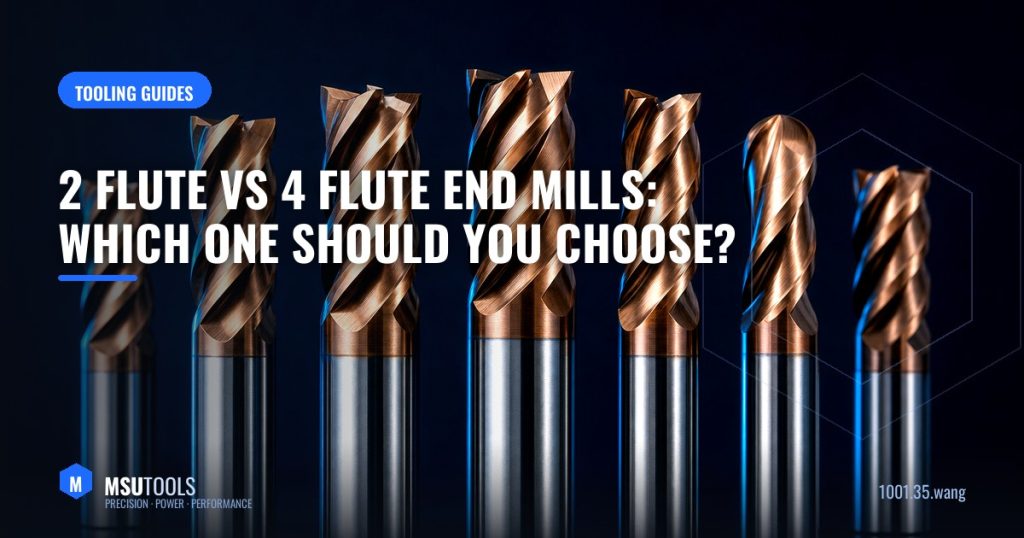
2 Flute vs. 4 Flute End Mills: Which One Should You Choose?
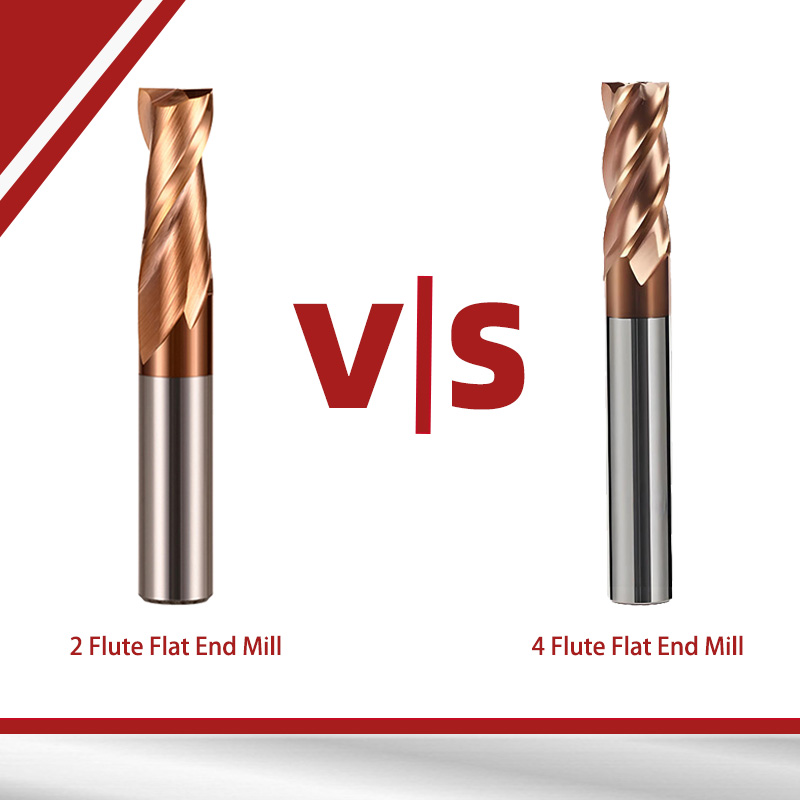
2 Flute vs. 4 Flute End Mills: Which One Should You Choose?
Table of Contents
When programming a CNC job, choosing between a 2 flute end mill and a 4 flute end mill directly affects tool life, surface finish, and machining efficiency. Instead of asking which one is “better”, it’s more accurate to ask: which flute count is right for this material and this operation?
What Does Flute Count Change?
The flute count is simply the number of cutting edges and chip channels on an end mill. It mainly influences three things:
-
Chip evacuation
-
Tool rigidity
-
Surface finish and feed potential
2 flute end mills have fewer flutes and larger chip pockets, so they clear chips more easily but are slightly less rigid.
4 flute end mills have more cutting edges and a thicker core, so they are more rigid and can give better finishes, but with less room for chips.
When to Use a 2 Flute End Mill
A 2 flute carbide end mill is usually the first choice for aluminum, non‑ferrous metals, and plastics.
Key advantages:
-
Excellent chip evacuation in soft, gummy materials like aluminum and copper, reducing chip packing and built‑up edge.
-
Higher material removal rates in aluminum because you can run high RPM with aggressive feed per tooth.
-
Safer for slotting and deep pockets, especially full slotting in aluminum where chip volume is high and space is limited.
Typical use cases and long‑tail keywords:
-
2 flute end mill for aluminum slotting
-
carbide 2 flute end mill for non‑ferrous metals
-
2 flute end mill for plastic machining
When to Use a 4 Flute End Mill
For steel, alloy steel, and stainless steel, a 4 flute end mill is usually the more reliable and productive choice.
Key advantages:
-
Higher rigidity thanks to a thicker core and more support behind each cutting edge, ideal for harder materials.
-
Better surface finish in side milling and contouring because more cutting edges engage the workpiece every revolution.
-
More cutting edges sharing the load, which helps distribute wear and can extend tool life in steels.
Recent Post
 How to Choose the Right End Mill for Aluminum? 06 Jul 2026
  How to solve the problem of the “break ” for micro carbide drills? 21 Apr 2026
 Questions about this topic?
Our engineers are happy to advise on tools, grades and cutting parameters.