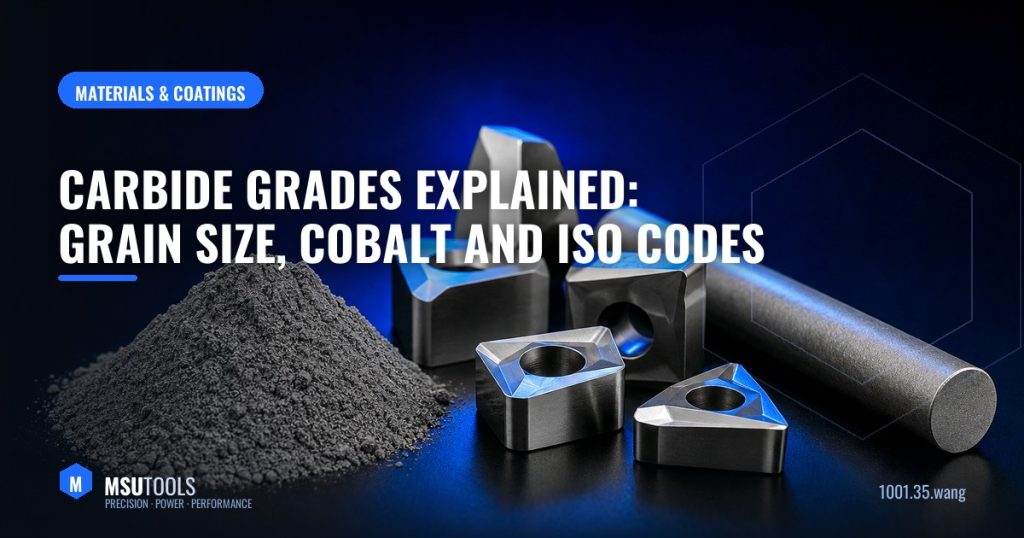
Carbide Grades Explained: Grain Size, Cobalt and ISO Codes
Why one carbide tool outlasts another that looks identical. Grain size, cobalt content and the ISO P/M/K/N/S/H classification — and how to…
Read more
Reaming vs Boring: Achieving Accurate Holes
A drilled hole is rarely accurate enough. When to ream, when to bore, stock allowances, and how to reliably hold H7 tolerance…
Read more
Face Milling: Insert Selection, Lead Angle and Entry Strategy
Face milling looks simple until the finish is poor and inserts chip on entry. How lead angle, cutter positioning and entry strategy…
Read more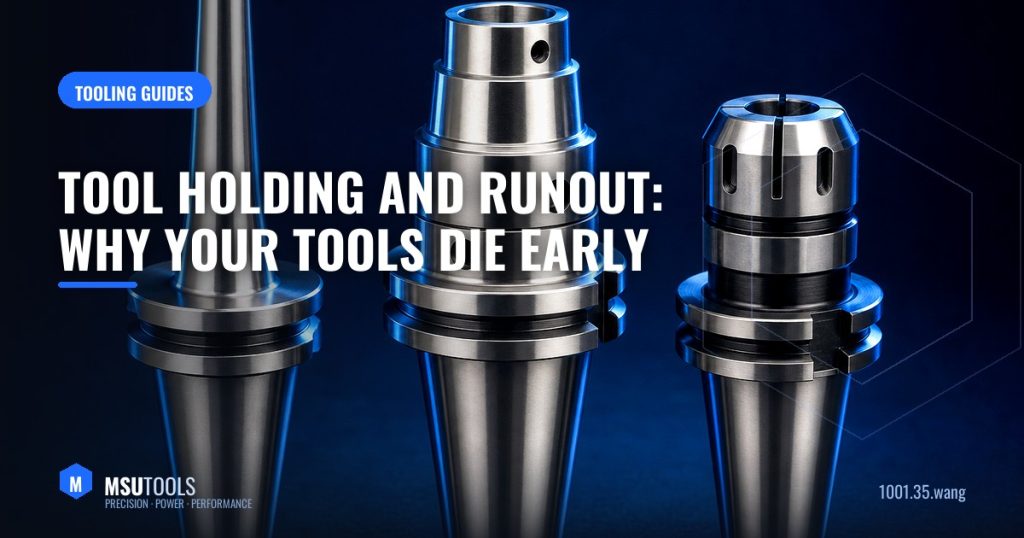
Tool Holding and Runout: Why Your Tools Die Early
Runout you cannot see is the hidden cause of most premature tool failures. What each holder type delivers, how to measure runout,…
Read more
Coolant Strategy: Flood, MQL, Dry and Through-Tool
More coolant is not always better — in hard milling it actively shortens tool life. A practical guide to choosing and aiming…
Read more
Speeds and Feeds Fundamentals for Carbide Tools
Cutting speed, feed per tooth, RPM and feed rate — the four numbers, how they relate, and how to derive safe starting…
Read more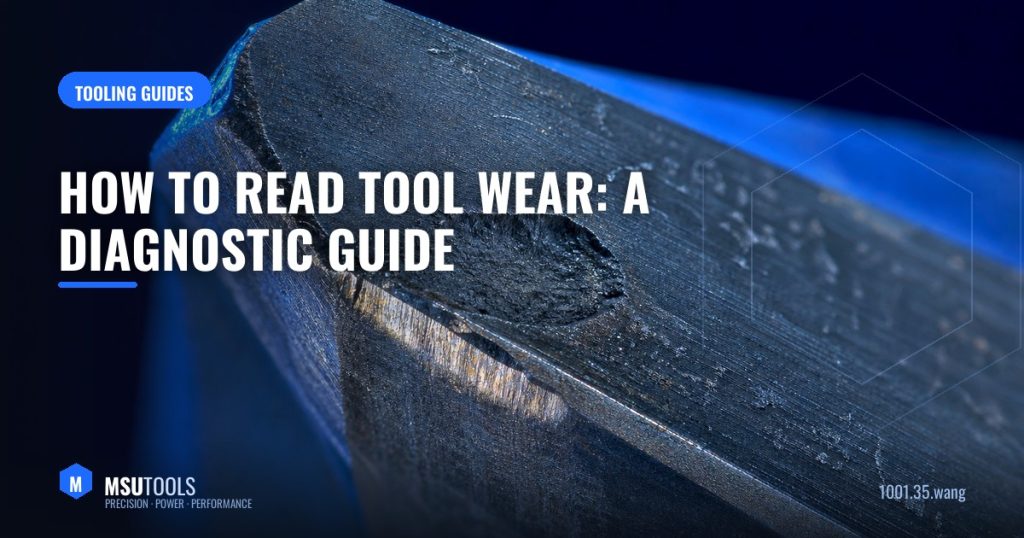
How to Read Tool Wear: A Diagnostic Guide
A worn tool tells you exactly what went wrong. Flank wear, cratering, built-up edge, notching, thermal cracking and fracture — what each…
Read more
Machining Titanium and Superalloys: Heat Is the Enemy
Titanium and Inconel destroy tools through heat, not hardness. Cutting data, coolant pressure, tool geometry and the strategies that make these materials…
Read more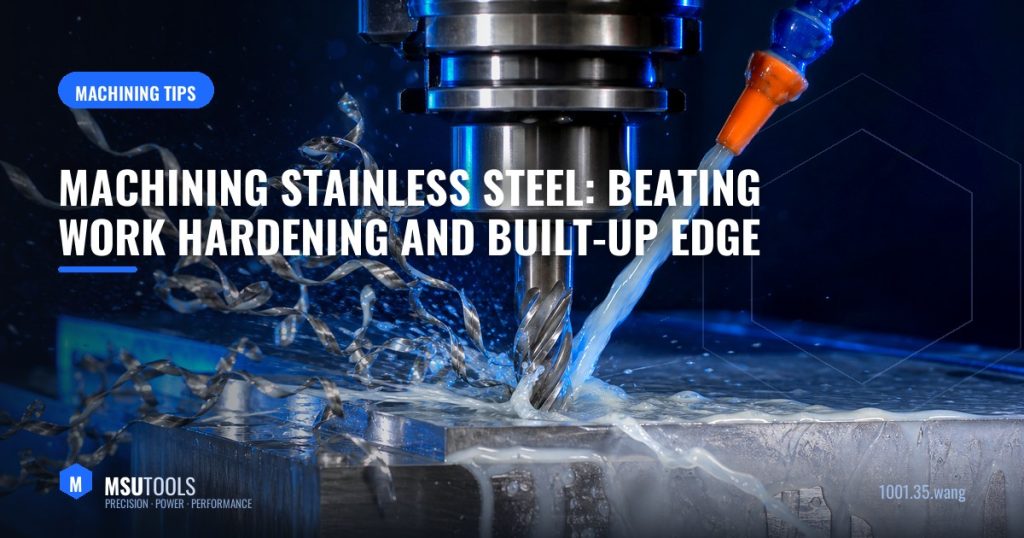
Machining Stainless Steel: Beating Work Hardening and Built-Up Edge
Austenitic stainless punishes hesitant cutting. Why 304 and 316 work-harden, how built-up edge forms, and the tool geometry, speeds and coolant that…
Read more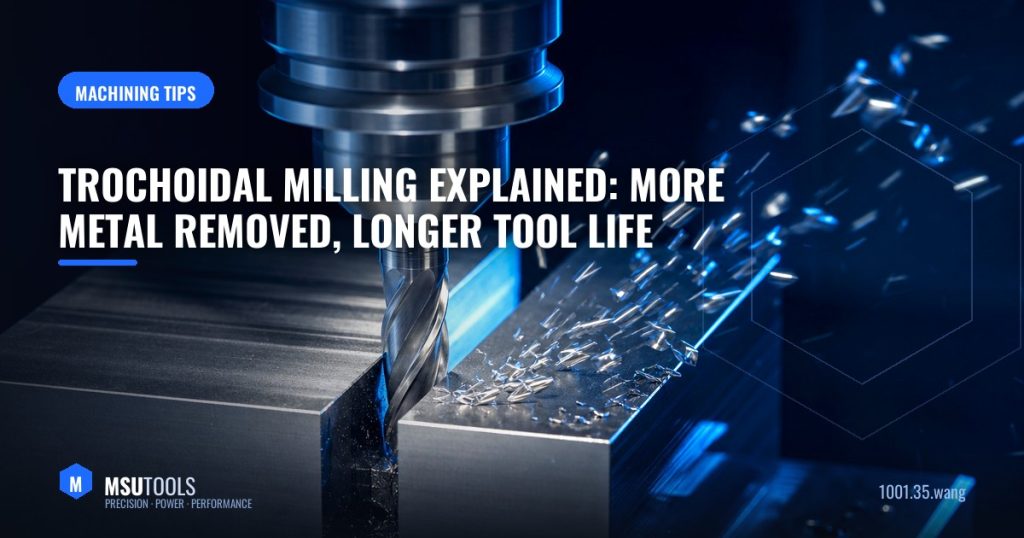
Trochoidal Milling Explained: More Metal Removed, Longer Tool Life
Deep cuts with light radial engagement sound counter-intuitive, yet trochoidal milling removes metal faster and multiplies tool life. Here is why, and…
Read more